
Walking into a well-designed Kitchen can feel like stepping into a living work of art—inviting, efficient, and calm. Whether you cook daily or entertain occasionally, smart design choices transform a cramped room into an inspiring culinary workspace. This article guides you through layout decisions, material choices, storage solutions, and lighting strategies to make the most of your kitchen.
Designing a Functional Kitchen Layout
Start by mapping how you move through the space: from fridge to prep to stove, and finally to sink and dishwasher. A well-considered kitchen workflow reduces steps and keeps tasks intuitive, improving both speed and enjoyment while cooking.
For example, the classic work triangle—linking refrigerator, stove, and sink—still serves as a strong foundation for efficient kitchen layout. However, in larger open-plan kitchens, islands and secondary prep zones can create multiple, complementary workstations.
Choosing Materials and Finishes for Your Kitchen
Countertops, cabinetry, and backsplash choices define both aesthetics and performance. Durable materials like quartz, granite, and high-quality laminate resist stains and scratches while offering a variety of finishes to suit modern or traditional themes.
Additionally, cabinet finishes—from painted to varnished wood—affect maintenance and visual warmth. Meanwhile, a textured backsplash or statement tile can tie colors together and protect walls from splatters.
Optimizing Storage and Cabinetry in the Kitchen
Smart storage solutions prevent clutter and make everything accessible when you need it most. Pull-out drawers, deep drawers for pots, vertical dividers for baking trays, and lazy Susans in corner cabinets maximize usable space.
Moreover, consider open shelving for frequently used items and a pantry for bulk storage to keep the counters clean. As a result, your kitchen will feel organized and visually lighter, helping both form and function coexist.
Incorporating Appliances and Technology
Modern appliances offer energy efficiency and advanced features that improve cooking precision. Built-in ovens, induction cooktops, and quiet dishwashers create a seamless look and elevate the performance of your culinary space.
In addition, integrated smart technology—such as app-controlled ovens or sensor faucets—can enhance convenience. When planning, leave space for ventilation, wiring, and service access to avoid costly retrofits later.
Lighting Strategies for a Bright and Inviting Kitchen
Layered lighting is essential: ambient light for general visibility, task lighting for prep areas, and accent lights to highlight design features. Under-cabinet LEDs are particularly useful for illuminating countertops without casting shadows.
Furthermore, natural light boosts mood and makes colors pop, so prioritize windows or a skylight if possible. Dimmers add flexibility, allowing you to shift from bright prepping light to softer ambient lighting for evening gatherings.
Designing an Efficient Kitchen Island
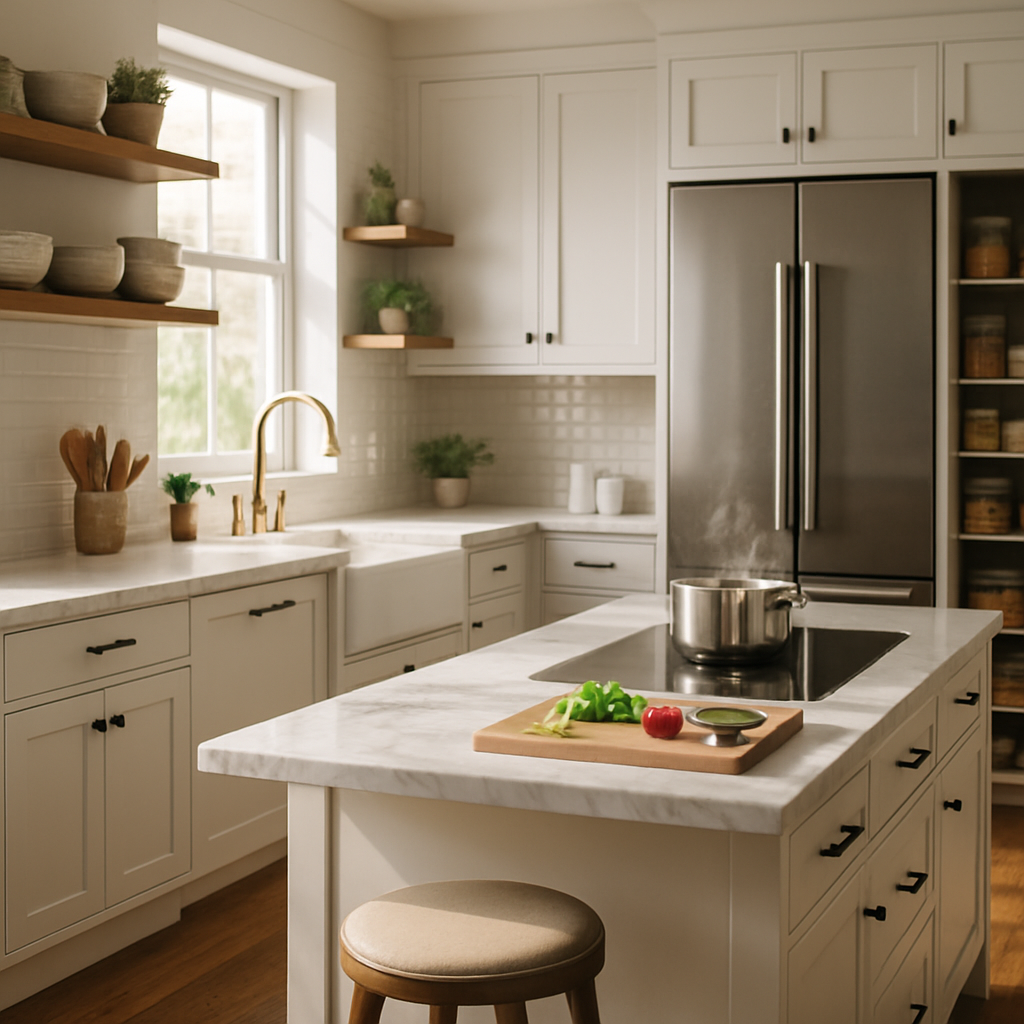
An island can serve as a prep zone, casual dining area, or storage hub, depending on your needs. When designing the island, think about circulation space so people can move around freely without interrupting someone who’s cooking.
Additionally, incorporate multi-use features like built-in outlets, a prep sink, or extra refrigeration to increase functionality. This centralized element often becomes the heart of a social kitchen, encouraging interaction while meals are prepared.
Color, Texture, and Aesthetics for Your Kitchen
Color choices influence perception: light colors can make a small kitchen feel larger, while deep hues add drama and warmth. Mixing textures—smooth countertops, matte cabinetry, and textured wood floors—creates visual interest without overwhelming the space.
Moreover, a coherent palette across surfaces and hardware ties everything together. Brass or matte black fixtures can add elevated detail, while butcher block accents warm up a contemporary scheme.
Kitchen Renovation Tips and Budgeting
Plan renovations in phases if a full overhaul isn’t feasible, starting with layout changes and high-impact updates like new countertops or appliances. Set a realistic budget that includes a contingency for unexpected costs.
Also, prioritize durable surfaces in high-use zones and consider resale value if you might sell in the near future. Thoughtful investments—like quality cabinetry and reliable appliances—pay off over time through longevity and enhanced livability.
Frequently Asked Questions
What is the best kitchen layout for small spaces?
The best layout for a small kitchen is one that maximizes efficiency, such as a galley or L-shaped plan with open shelving and compact appliances. Focus on vertical storage, light colors, and clear sightlines to create the illusion of space while maintaining an ergonomic workflow.
How much counter space do I need in my kitchen?
Allocate at least 36 inches of continuous countertop for basic meal prep, and ideally 48 inches near the sink or stove for more complex cooking. Additional prep surfaces like an island or portable cart increase flexibility for multi-step cooking.
Which countertop material is best for durability and maintenance?
Quartz is often the top choice for durability and low maintenance because it resists stains and doesn’t require sealing. Granite and porcelain are also durable options, while solid surface materials offer a balance of repairability and cost-effectiveness.
How can I improve storage in corner kitchen cabinets?
Use pull-out carousels, pivoting trays, or pull-down shelving to access the full depth of corner cabinets. These solutions eliminate dead space and make it easier to retrieve pots, pans, and small appliances without strain.
Should I choose an open-plan kitchen or a closed kitchen?
Open-plan kitchens encourage social interaction and light flow, making them ideal for entertaining and family life, while closed kitchens contain odors and noise, providing a dedicated cooking zone. Your lifestyle and need for privacy will determine the best choice.
How do I select the right lighting for food photography in my kitchen?
For food photography, combine soft natural light from windows with adjustable task lighting to control shadows and highlights. Use daylight-balanced bulbs and diffusers to create a clean, consistent light that showcases textures and colors accurately.
Designing a kitchen is a creative process rooted in practical decisions: optimize layout, prioritize durable materials, and layer light and storage for a space that supports how you live and cook. Apply these ideas step by step, and you’ll build a kitchen that looks beautiful while functioning effortlessly for years to come.